Diving into the multipolar world and Doughnut Economics - by Simran Dhingra and Marcel Artioli
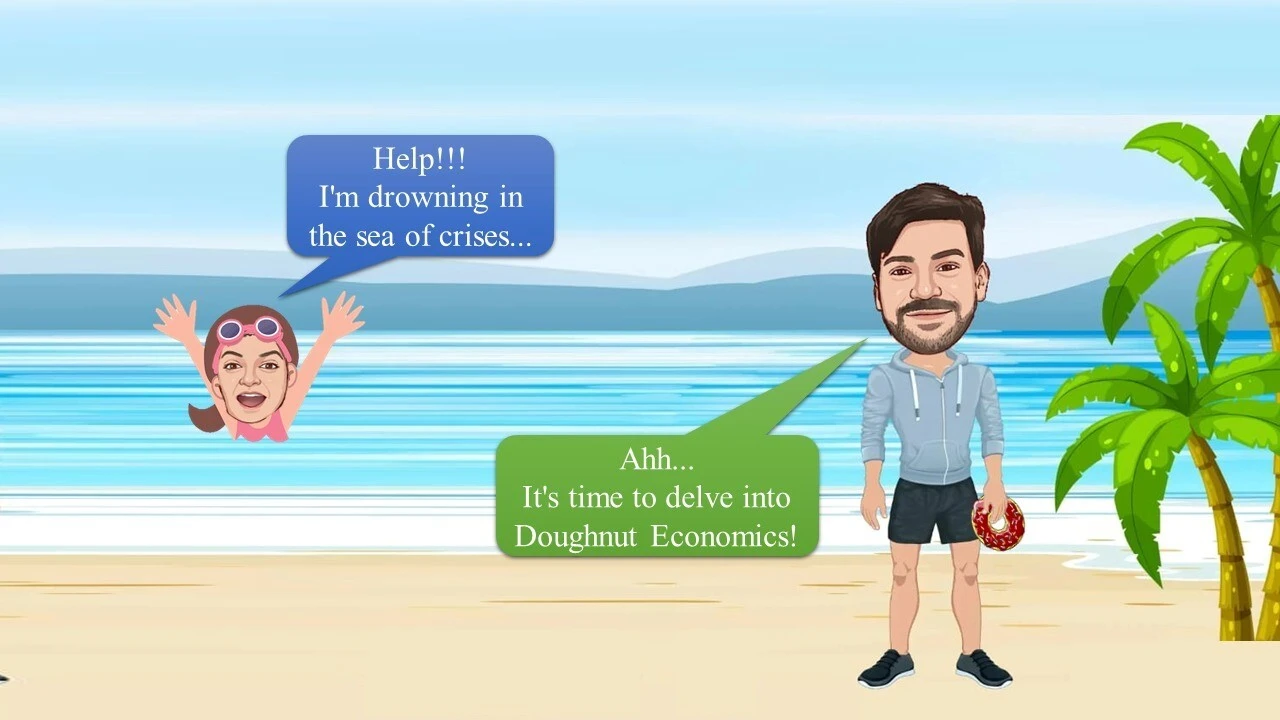
Living in the 21st century amidst a staggering world order, the academic module on Global Governance and Transformations to Sustainability piqued our interest. While there were some heated debates and intriguing deliberations during the sessions, being economics enthusiasts, we wanted to delve deeper into the concept of Doughnut Economics.
The existing global order is unlikely to persist in its present form. Climate crisis, trade wars, war in Ukraine, pandemics, the rise of illiberal backlashes against globalisation are a few examples of the challenges that global governance is currently facing. Multipolarity has upturned the global structures formerly dominated by the United States and Western allies. Emerging economies, mostly regional powers from the Global South, gained momentum, playing a crucial role on new trends regarding digital transformation, climate adaptation and mitigation, promotion of the Agenda 2030 and the Sustainable Development Goals (SDGs) championed by the United Nations (UN).
How can states and non-state actors cooperate in order to address all these issues? How to tackle so many overlapping and multiple crisis? Which local agents of change are creating new things around the world? Are there any innovative or pervasive approaches and methodologies available to set up this new decisive and imperative framework for global governance? These and other questions settled the common ground for the first academic Module of the MGG Academy 2022: “Global Governance and transformation to sustainability”.
While discussing about these imperative subjects, we ascertained that cities are epicentres for multiple crises globally. Therefore, it is significant to work on improving the health and standards of the cities whilst understanding the interactions of different stakeholders using a plethora of infrastructure mechanisms. And voila! What better way to comprehend the transformative power of the cities than applying the Doughnut to the city!
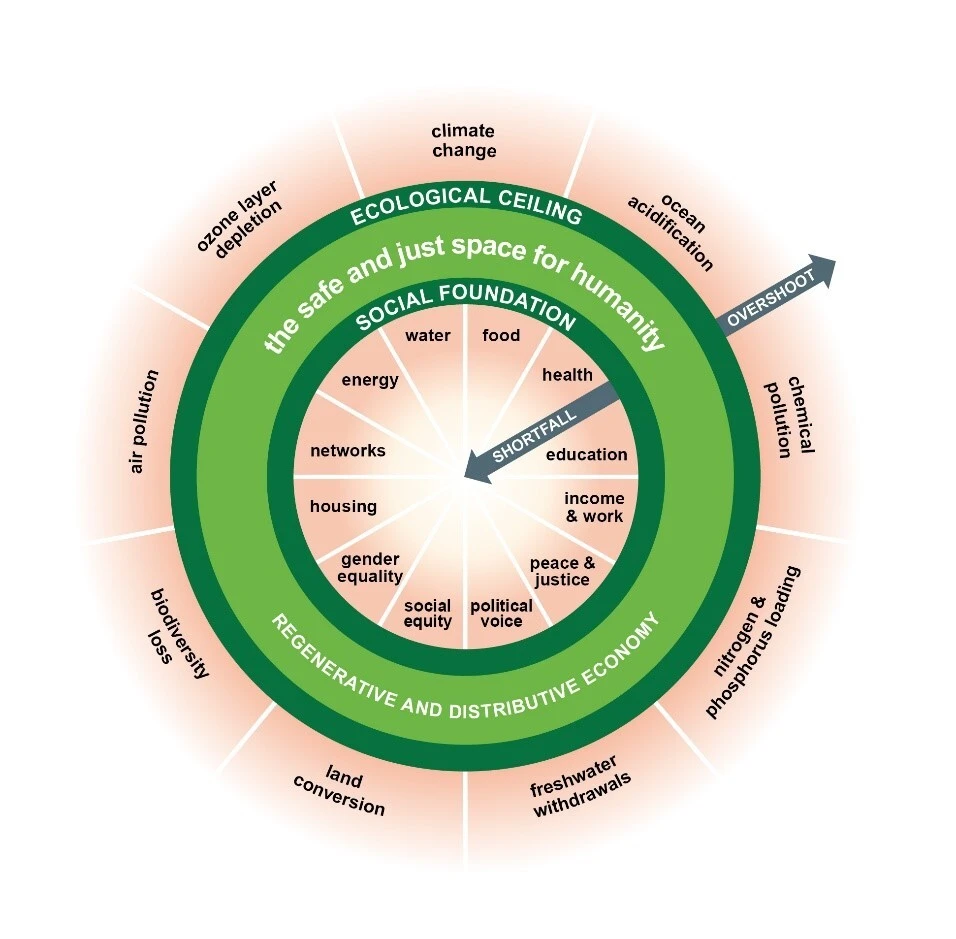
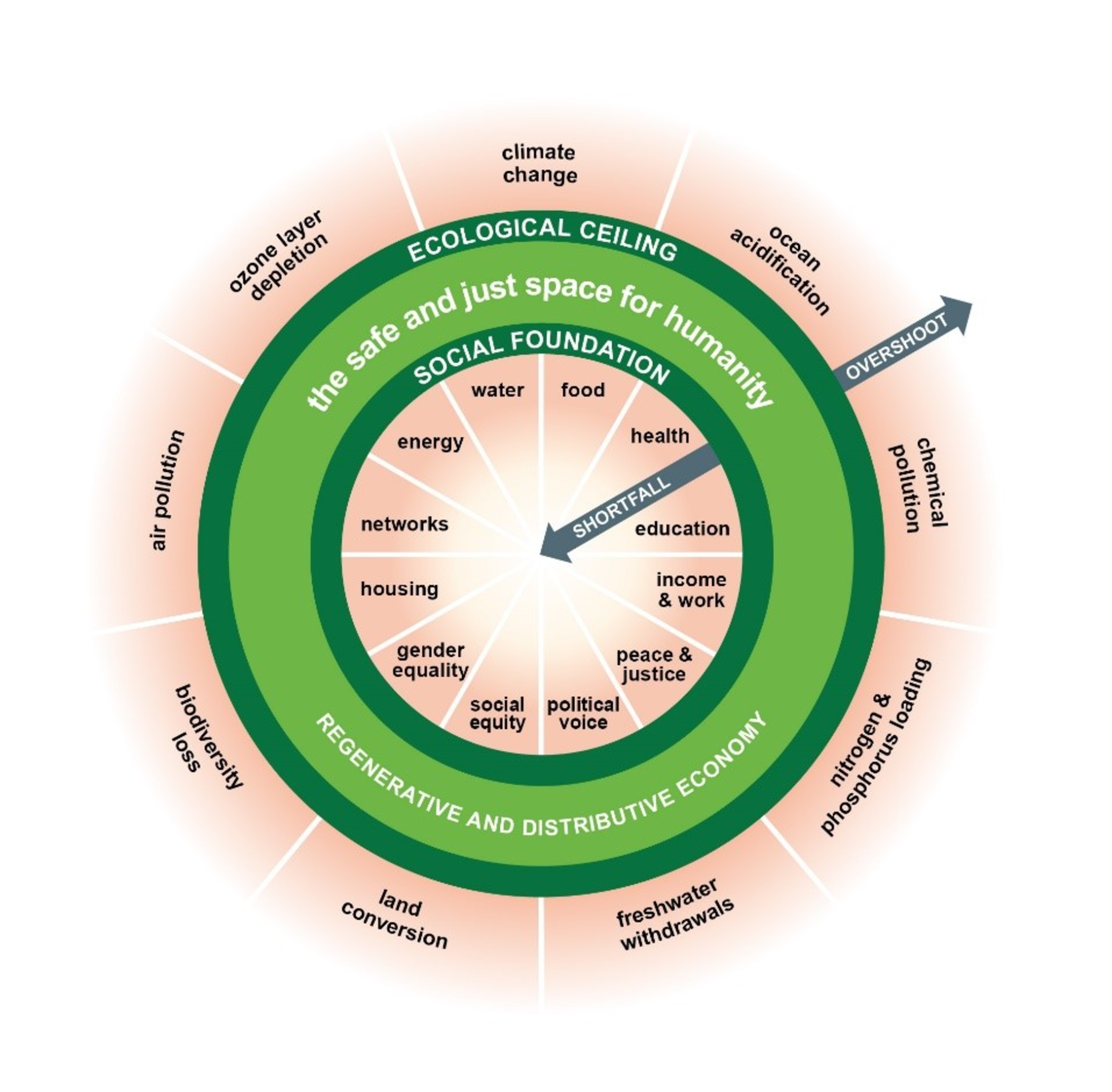
Analysing the concept of Doughnut Economics made us ponder that there is often a trade-off between societal and environmental needs. Through applying four lenses to the city doughnut (local-social, local-ecological, global-social and global-ecological), we identified the characteristics of the effects on other priorities as to how we can create positive co-benefits and how we can reduce negative interconnections. Our key takeaways:
- Multiple crises have (and will have) major effects on the development cooperation and sustainable development.
- Cities experience socio-economic disparities and lack of infrastructure for urban development.
- It is through the doughnut that we ascertain the resources and effects of these crises on the social and ecological level.
- While applying the doughnut, the geo-economic as well as geo-political impact and power dependencies have to be considered.
- To stay in the safe zone within the doughnut is not only a matter of technical or financial effort but the political will, too.
- Stronger and coherent narratives are required to decouple emissions from growth.
- There is no one doughnut that fits all: Just like everyone has a different taste and enjoys a particular flavour of doughnut, each city has to adapt the doughnut in its own way.
- It is of utmost importance that the social sectors (inner part of the doughnut) are fulfilled by making the actors more inclusive.
- There are several leverage points in the cities and a single change makes the interconnections between actors and institutions even more complex. Hence, the connections and interactions between different sectors, action fields and administrative levels have to be strengthened.
- We need to put our energies together to tap the areas of urban development with the biggest potential leverage effects for the urban transformation towards sustainability.
- Collaborative governance structures have to be established and civil society has to be engaged as partners.
- Gone are those days when we perceived “Take, Make, Use, Lose” to be cool. What we need now are sustainable and innovative practices to stay between the social foundation and ecological ceiling of the doughnut.
- It would take a conscious effort to reduce the shortfall in the inner segment of the doughnut while not overshooting the outer segment. Hence, there is a need to greatly accelerate to emission free transition. But radical changes are possible! With this vision in mind, we strive to find solutions and think of apt methods/ strategies for making our cities better. Till then, enjoy the doughnut!
Keep calm and eat a doughnut! 🙂

About the authors: